Keychron keycaps

Keychron is a Hong Kong-based mechanical keyboard manufacturer founded in 2017, specializing in wireless keyboards with seamless Mac and Windows compatibility. The brand gained rapid recognition for making mechanical keyboards accessible to mainstream users through Kickstarter campaigns, then expanded into the enthusiast market with their V-series and Q-series lineups. Keychron's product range spans from budget-friendly wireless boards to premium gasket-mounted aluminum keyboards with QMK/VIA firmware support, covering every major form factor from full-size to 40%. As of 2025, Keychron has become one of the most recognizable names in mechanical keyboards globally, with a reputation for delivering solid build quality and features at competitive price points.
Custom keycaps for Keychron keyboards
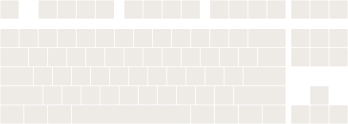
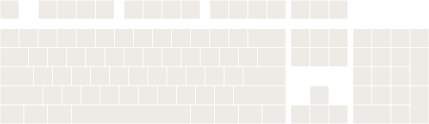

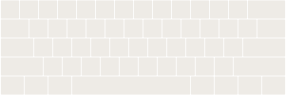
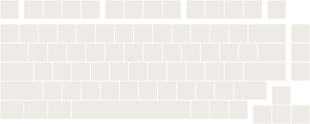
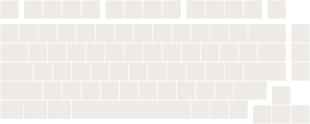
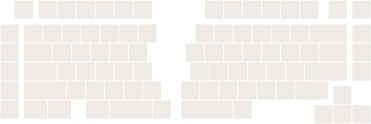
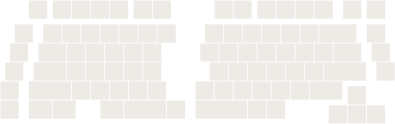
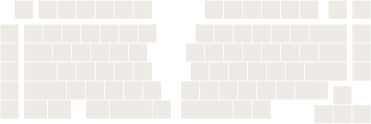
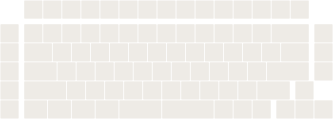
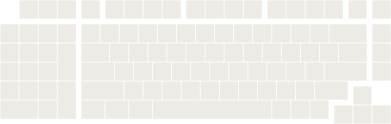
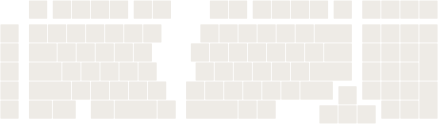
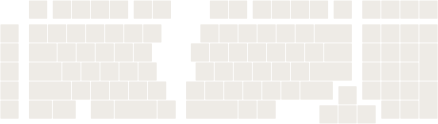
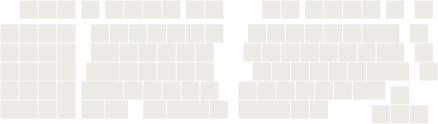
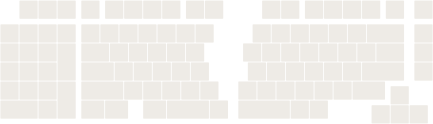
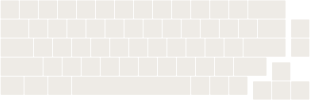
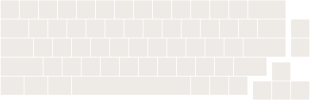
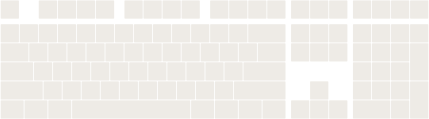
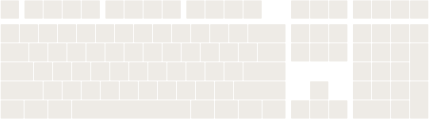
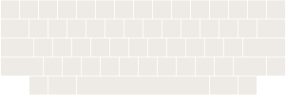
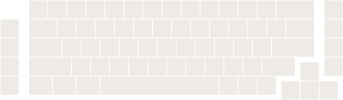
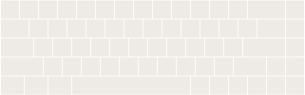
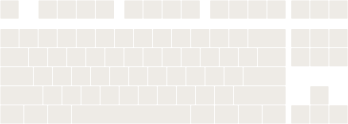
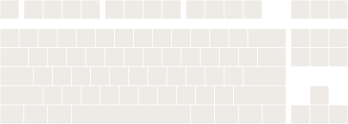
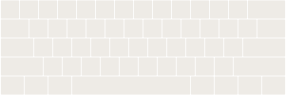
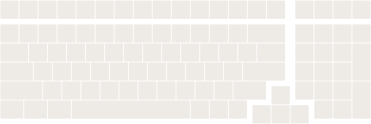
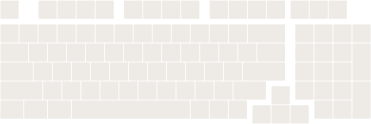
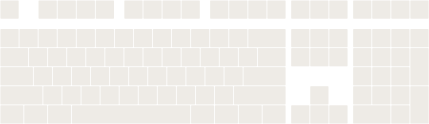
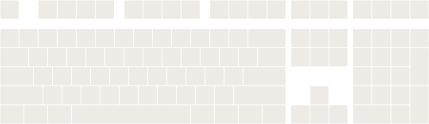
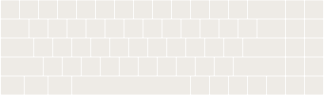
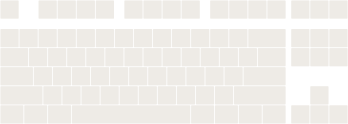
Original keycaps from Keychron
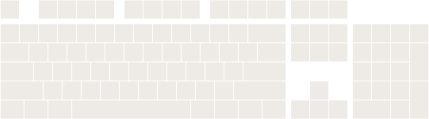
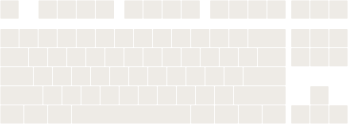
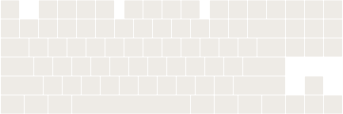
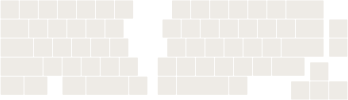
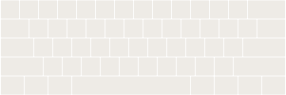
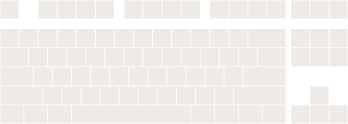
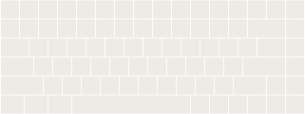
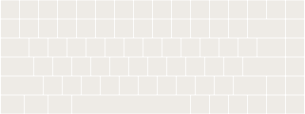
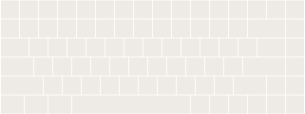
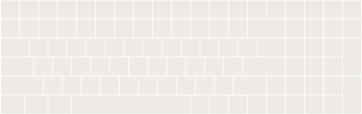
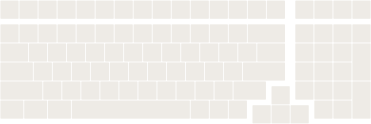
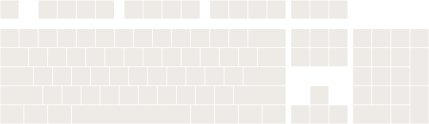
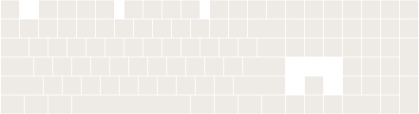
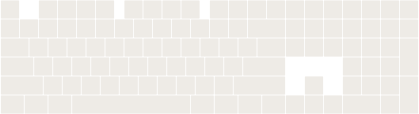
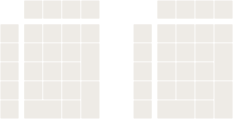
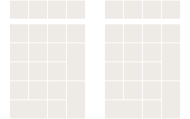
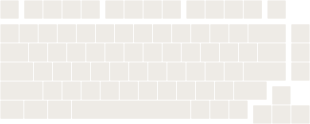
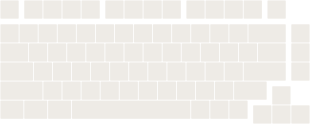
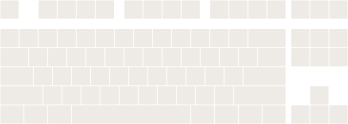
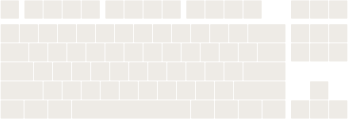
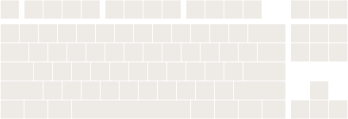
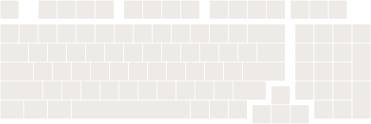
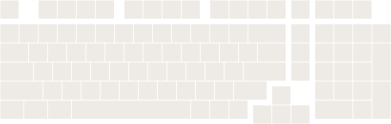
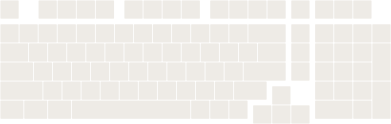
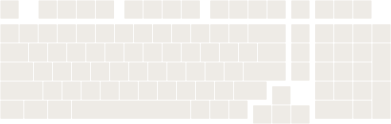
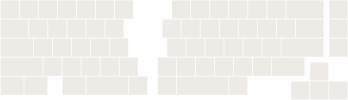
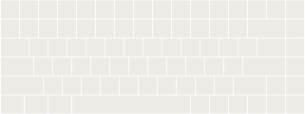
Keychron equips their keyboards with doubleshot PBT keycaps across most of their product lineup, a significant upgrade from the thin ABS caps common on mainstream keyboards. The K-series wireless boards (K1, K2, K3, K6, K8, K10) use OEM profile keycaps with a maximum height of approximately 11.5mm and cylindrical sculpting. These caps feature dye-sublimated or doubleshot legends depending on the specific model and generation—newer releases predominantly use doubleshot PBT for superior legend durability.
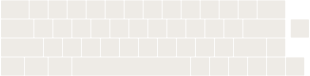
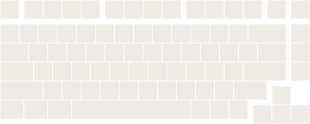
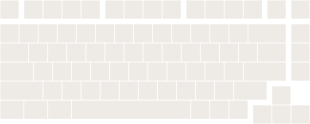
The V-series and Q-series enthusiast keyboards come with OSA profile keycaps (Keychron's proprietary profile) by default. OSA stands at roughly 11mm tall with spherical tops and medium sculpting—positioned between Cherry and SA profiles. These sets are manufactured in doubleshot PBT at 1.3–1.6mm wall thickness, producing a deep "thock" sound signature. OSA keycaps ship in 155–158 key configurations covering virtually all layouts from 60% through full-size, including Alice support on relevant models.
Keychron's stock keycaps include both Mac and Windows modifier keys in every box—a defining feature of the brand. Mac users receive Command and Option keys alongside standard Ctrl, Alt, and Windows keys, making Keychron one of the few manufacturers catering equally to both ecosystems. The keycaps use standard Cherry MX stems and are compatible with the full range of Cherry MX and MX-clone switches Keychron offers (Gateron, Keychron's own K-series switches, and others).
Material and manufacturing specifics:
- Doubleshot PBT construction on V-series and Q-series (legends molded through the entire keycap thickness)
- 1.4–1.5mm wall thickness on most sets
- Shine-through compatibility on backlit models (though solid caps are more common on premium lines)
- Standard ANSI layout, with ISO options available on select models
- PBT texture varies by generation—earlier sets had slightly rougher surfaces; current production uses smoother PBT
Replacement and aftermarket options:
Keychron sells replacement keycap sets directly through their website and Amazon storefront. Available profiles include OSA (most common), OEM, and some XDA sets, with prices ranging from $30–80 depending on size and profile. These replacement sets maintain the dual Mac/Windows legend approach. The brand also collaborates with keycap designers for limited colorway releases, though availability is typically limited to specific keyboard bundles rather than standalone purchases.
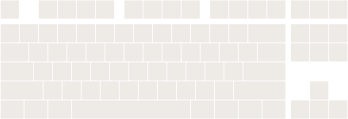
All standard Keychron keyboards accept standard MX-compatible aftermarket keycaps. The V-series and Q-series use completely standard layouts—6.25u spacebar bottom rows on most models, with some 75% variants offering 1.75u right shift compatibility. Low-profile models (K1, K3, K5, K7) use low-profile switches with MX-compatible stems but require low-profile keycaps specifically designed for reduced switch height—standard MX-height keycaps will not work properly on these boards. Compatible low-profile options include PFF (Penguin Flat Feet) and PBS (Penguin Belly Slide) profiles, which accommodate the shorter actuation distance and reduced total height of low-profile switches.
Custom Keychron keycaps from Yuzu
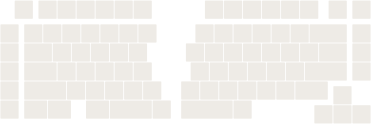
Keychron keyboards accept standard MX-compatible keycaps across their V-series, Q-series, and standard K-series models, making them ideal for full customization. At Yuzu, you can design custom dye-sublimated PBT keycaps precisely matched to your Keychron's layout—whether you're using a Q1 Pro, K8 Pro, V6, or any other standard MX-compatible model. Our customization tools support all Keychron keyboard sizes (60%, 65%, 75%, TKL, 1800, and full-size) and let you create keycaps in any color combination, with custom legends, and in your choice of profile. For Keychron's low-profile models (K1, K3, K5, K7), low-profile keycap options like PFF (Penguin Flat Feet) and PBS (Penguin Belly Slide) are compatible and provide the reduced height needed for low-profile switches.
FAQ
How Keychron became a mechanical keyboard giant
Keychron launched in 2017 with a mission to make mechanical keyboards accessible to Mac users—a demographic largely ignored by the gaming-focused mechanical keyboard market at the time. The company's first product, the K1 wireless mechanical keyboard, debuted on Kickstarter in early 2018 and raised over $1 million, validating the concept of a slim, Mac-compatible mechanical board that worked seamlessly across devices via Bluetooth.
The Keychron K2 followed in late 2018 and became the brand's breakout success. This compact 75% wireless board offered hot-swappable switches, Mac/Windows dual compatibility, and a $69–79 price point that undercut competitors significantly. The K2's Kickstarter campaign raised over $1.4 million, and the model remains one of Keychron's best-sellers. Throughout 2019–2020, Keychron expanded the K-series to cover nearly every form factor: the K6 (65%), K8 (TKL), K4 (96%), and K10 (full-size), all maintaining the wireless, multi-device formula.
In 2021, Keychron made a strategic pivot toward the enthusiast market with the Q1, their first fully aluminum gasket-mounted keyboard. Launched at $169 with QMK/VIA firmware support, double-gasket mounting, and a rotary encoder, the Q1 brought premium construction to a sub-$200 price point—historically the domain of $300+ group buy keyboards. The Q1's success spawned the Q-series (Q2, Q3, Q5, Q8, and beyond), each targeting different form factors with the same premium construction philosophy. By 2023, the Q-series had sold hundreds of thousands of units globally.
The V-series, introduced in 2022, targeted an even more accessible price tier. Starting at $64–84, these wired keyboards offered gasket mounting, hot-swap sockets, QMK/VIA support, and solid build quality—essentially the Q-series in polycarbonate instead of aluminum. The V1 (75%) became Keychron's entry-level recommendation for users wanting customizable firmware without premium pricing.
In 2023–2024, Keychron continued expanding: the Lemokey sub-brand launched premium wireless aluminum boards at $194+, the Q8 and Q10 brought Alice layouts to the mainstream market, and the Q1 HE introduced Hall Effect switches to the Q-series at $219. The company also deepened its switch offerings, developing its own K-series linear and tactile switches to supplement Gateron partnerships.
As of early 2025, Keychron operates as one of the largest mechanical keyboard manufacturers by volume, with distribution through Amazon, their direct website, and retail partners worldwide. The brand's ability to deliver enthusiast-grade features at accessible prices—combined with consistent Mac support and wireless options—has made Keychron a default recommendation for both newcomers and experienced builders looking for reliable, customizable keyboards. Their commitment to QMK/VIA firmware across enthusiast lines ensures long-term customizability and positions them as a bridge between mainstream and custom keyboard communities.